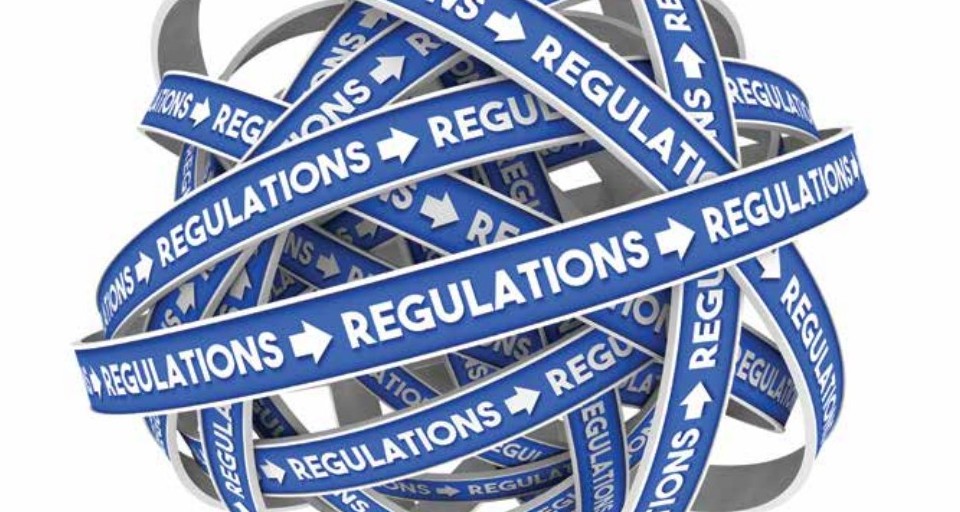
Health and safety is obviously desirable. Who doesn’t want more of it? But as Tracey Brown and Michael Hanlon pointed out in their book Playing By the Rules (2016), rules to advance health and safety can have perverse effects. Much of what organizations do in order to protect safety turns out to be “safety clutter” [Drew Rae et al, 2018], defined as “the accumulation of safety procedures, documents, roles, and activities that are performed in the name of safety, but do not contribute to the safety of operations.”
This will be familiar to anyone who has been forced to engage in burdensome and apparently pointless compliance activities generated by health and safety rules. Identifying the problem, however, does not explain why it is so persistent and what should be done in response.
It may help to view the prevailing approach to health and safety as falling into the category of what I call “stupid rules”. As I have argued in a recent book, stupid rules are not just rules we find silly or pointless. They are rules that overly reduce the ability of decision makers inside organizations to exercise their discretionary judgement, or in other words, their authority.
Not all rules are stupid
Of course, not all safety rules are stupid. Some practices should not be discretionary. “Wear your safety gear”, “don’t drink alcohol and operate machinery” and “observe mandatory break periods” are all useful, non-discretionary rules for most work environments.
The question is, who should decide which rules should be enforced, and how they should be applied, in particular work environments? It is on this point that workplace safety rules appear to have taken a pathway to stupid rules.
One step to stupidity was taken when apparently sensible “principles-based” legislation evolved into minutely detailed risk minimization rules. The United Kingdom’s pathbreaking
Health and Safety at Work Act of 1974 took a “principles-based” approach to regulation – safety precautions were to be implemented “so far as is reasonably practicable”. The country saw a significant decline in workplace deaths in the following decade. More recently, however, the gains have plateaued – while the compliance burden continues to rise.
No defined end point
As with many “principles-based” rules, definitions of “reasonably practicable” were subject to being ratcheted upwards in the direction of risk- minimization, a dynamic that almost inevitably results in escalating compliance costs divorced from benefits. One way this happens is via the legal system itself making risk minimization a requirement. Legislation, like New Zealand’s Health and Safety at Work Act 2015, explicitly aims to protect people against “harm to their health, safety, and welfare by eliminating or minimising risks arising from work.”
Since risks cannot be fully eliminated, the target of minimizing risks constantly recedes – there is always more that can be done. With an ultimately arbitrary endpoint – where exactly the risk minimization line is drawn – businesses have every incentive to seek cover by turning to outsiders to determine what constitutes best practice or reasonable compliance. If they are worried enough about risk, they can also develop their own internal over-compliance rules, but there is safety in numbers and external benchmarking.
Generating blue tape
This is where a second step to stupidity appears to have been taken, in the form of “blue tape” rules. Blue tape has been defined as “obligations imposed not by government regulation, but by businesses or business intermediary organisations” (this definition comes from the UK’s Health and Safety Executive, a government organization, in a report that pointed out that many burdensome safety rules are set by private bodies).
The generators of blue tape are mostly not people working anywhere near the coalface in a particular industry or workplace. They are standards organizations, private accreditation and certification bodies, and the professionals who have made generic health and safety compliance their livelihood.
They produce rules and standards, like ISO 45001, that lean heavily towards process and paperwork – general standards that can apply to any workplace. And, conveniently for these professionals, these rules lend themselves to being auditable via the requirements to invest in written policies, risk management matrices, documentation requirements and review procedures.
The generators of blue tape also have obvious interests in the risk minimization ratchet: best practice and the regulatory framework itself constantly evolves in part due to their activity. The same dynamic has been observed by Eleni Tsingou (“New governors on the block: the rise of anti-money laundering professionals”, 2017) in the area of anti-money laundering or AML rules, which now generate grotesque compliance costs despite evolving from apparently sensible “principles-based” rules.
Authority for decisions
My work on stupid rules suggests the way out is to bring more authority for decision-making back into the hierarchy of the organization itself. Hierarchy is not simply a system for rule-setting and monitoring compliance: it is a system for distributing decision-making at all levels in an organization. It is efficient and effective because many decisions require people to exercise situational judgement and expertise: uncertainty is inevitable and often cannot be eliminated via rule-based systems for managing calculable risk.
When it comes to managing workplace hazards, the knowledge and judgement that matters is not abstract and generic, but specific to the particular industry and, in some cases, the situational demands of a particular workplace. Complex, generic rules for processes, documentation and policy development create dysfunction when they displace attention and effort, creating costs that can actually make unsafe practices more likely.
A legal framework that incentivises employer attention to safety is absolutely sensible and necessary. Without legal obligations for workplace safety, workplace hazards and dangerous practices can easily creep in. If health and safety rules are to avoid becoming stupid, however, compliance with the legal framework needs to leave space for decision-makers at the coalface.
Natasha Hamilton-Hart is Professor at the University of Auckland Business School, where she teaches global sustainability and international business. She is the author of the recent book Stupid Rules: Reducing Red Tape and Making Organizations More Effective and Accountable.